
In this guide
Percentage questions become easier when you identify the base. A change is measured relative to the original value; a discount is calculated from the original price; a final value is the original plus or minus that amount.
OpenStax defines percent increase as the amount of increase divided by the original amount, and percent decrease in the same way using the amount of decrease.
OpenStaxPercentage increase and decrease
For an increase, subtract original from new, divide by the original, then multiply by 100. If a price moves from 80 to 100, the increase is 20; 20 divided by 80 is 0.25, so the increase is 25%.
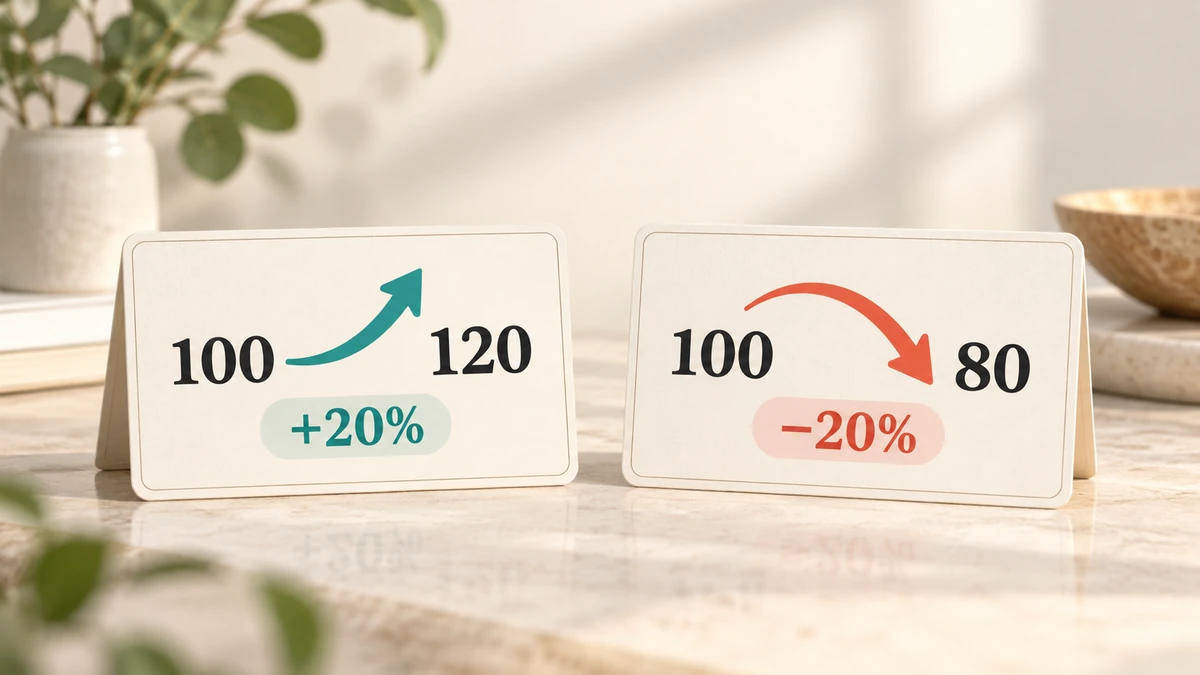
For a decrease, subtract new from original, divide by the original, then multiply by 100. Moving from 100 to 80 is a 20% decrease. Notice that going up 25% and down 20% returns to the starting point because the two percentages use different bases.
Discount and sale price
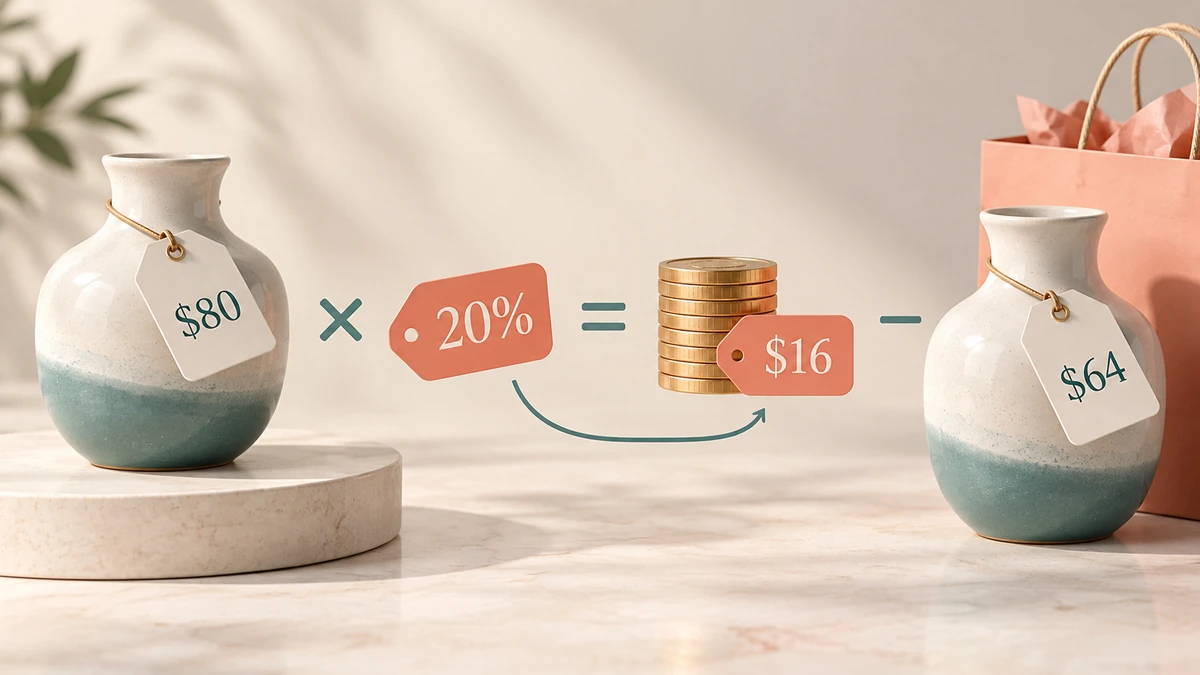
Discount amount equals discount rate times original price. Sale price equals original price minus the discount. OpenStax presents these as separate steps, which helps when a receipt needs to show both the savings and the final price.
OpenStaxSuccessive discounts do not simply add. A 20% discount followed by 10% off applies the second discount to the already reduced price: 100 becomes 80, then 72. The total reduction is 28%, not 30%.
- Change percentage: change ÷ original × 100.
- Discount amount: original × discount rate.
- Sale price: original − discount amount.
Reverse-percent questions
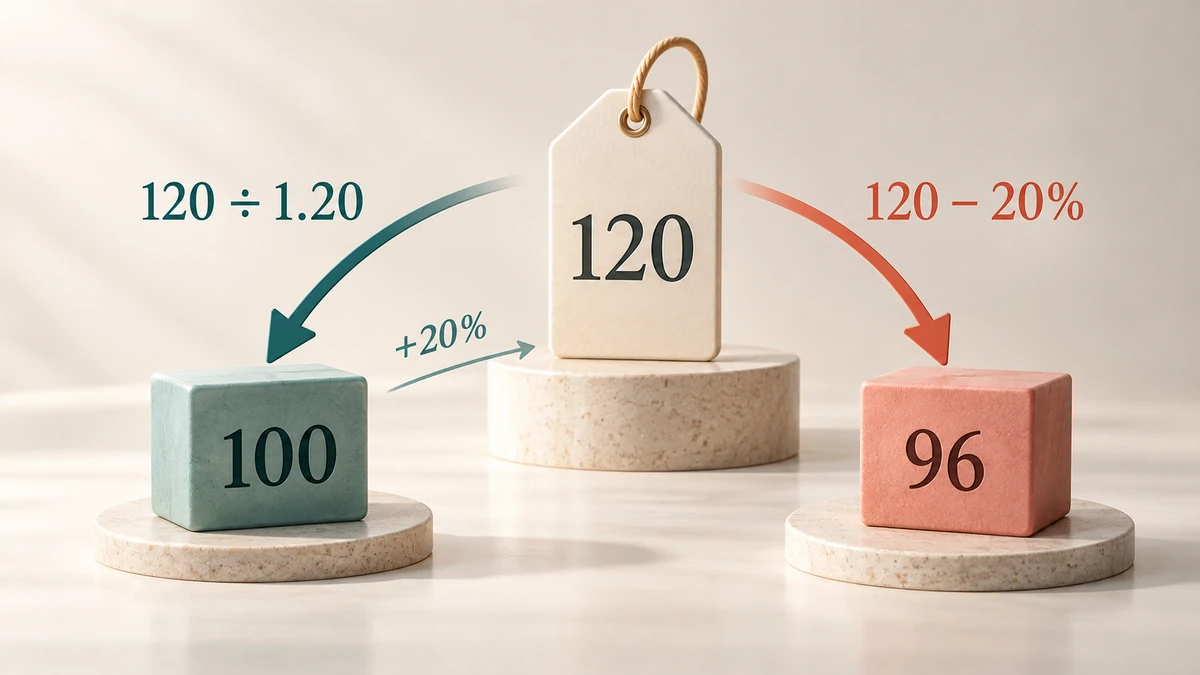
If a final price of 120 already includes a 20% increase, divide 120 by 1.20 to recover the original 100. Subtracting 20% from 120 would produce 96 because it uses the wrong base.
A calculator can remove arithmetic friction, but label the original, new, rate, and result before entering numbers. Most incorrect answers begin with assigning the wrong number as the base.
Key takeaways
- Percentage change is measured against the original value.
- Sequential percentages apply to a changing base.
- Reverse a percentage by dividing by the growth or reduction factor.
Sources
References for factual claims and further reading.
- 01
Educational information only. Follow the requirements of the receiving organization, product label, applicable standard, or qualified professional for your situation.